

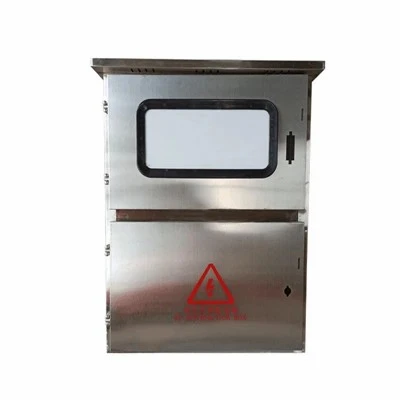
Product Overview
The AMF-Series Automatic Transfer Switch monitors 3-phase utility and generator lines. Upon utility voltage drop, phase loss, or frequency deviation, the internal microprocessor controller initiates generator startup and switches the load to emergency power within programmable thresholds. Transfer mechanisms utilize a motorized dual-throw design with mechanical and electrical interlocking to prevent parallel feeding. Designed for integration into low-voltage switchboards and emergency power distribution systems.
Technical Specifications
|
Parameter |
Specification |
|
Rated Operational Current (Ie) |
100A – 3200A |
|
Rated Operational Voltage (Ue) |
AC 400V / 415V (3-Phase 4-Wire), 50Hz / 60Hz (Optional tropicalized finishes available for high-humidity regions) |
|
Pole Configuration |
3P, 4P (Neutral pole switched or solid) |
|
Transfer Time |
< 1.5 seconds (Controller dependent; mechanical switchover < 180 ms) |
|
Short-Circuit Withstand (Icw) |
50kA to 85kA (0.1s to 1s, frame-size dependent) |
|
Controller Interface |
Programmable LCD digital display, Modbus RTU / RS485 communication |
|
Operating Temperature |
-20°C to +60°C |
|
Mechanical Endurance |
>= 50,000 operations |
|
Electrical Endurance |
>= 10,000 operations |
Key Features
Dual Mechanical & Electrical Interlocking: Cam-driven linkage prevents simultaneous closure of utility and generator breakers under any failure mode.
Zero-Current Neutral Switching: Prevents circulating currents and prevents nuisance tripping of upstream earth-leakage protection devices.
Programmable Delay Timers: Adjustable engine start delay, transfer delay, retransfer delay, and engine cooldown timers configured via front-panel keypad or PC software.
Manual Emergency Operation: Integrated manual handle allows safe off-load transfer during total control power failure.
Auxiliary Contact Outputs: 4 sets of dry contacts provide remote status indication for utility normal, generator normal, switch position, and fault alarm.
Applications
Commercial & Industrial Buildings: HVAC, emergency lighting, and life-safety fire pump backups.
Telecommunications: Cell towers and remote switching stations requiring unattended reliability.
Healthcare Facilities: Operating rooms and intensive care units requiring rapid microsecond-class transition stability.
Water Treatment Plants: Continuous pumping stations requiring automated failover to prevent municipal overflow.
Customization & OEM Support
Enclosure Integration: Available as open-type chassis units for OEM panel builders or housed in IP32 to IP54 powder-coated steel enclosures.
Voltage & Frequency Adaptation: Custom configurations for 220V, 480V, 600V systems, and 60Hz marine/offshore applications.
Communication Protocols: Optional CANopen, SNMP, or Ethernet/IP modules for integration into existing SCADA or BMS networks.
Brand & Firmware Customization: OEM private-label faceplates, customized controller parameter presets, and multi-language firmware options for global market distribution.
Manufacturing & Quality Control
Production utilizes automated CNC busbar punching and bending machines to maintain dimensional tolerances within +/- 0.1 mm, reducing contact misalignment and thermal resistance. Assembly lines incorporate torque-calibrated pneumatic drivers for terminal connections, eliminating loose joints that cause localized heating.
Quality verification includes:
Dielectric Strength Testing: 2500V AC isolation test applied between live parts and frame for 1 minute.
Full-Load Thermal Imaging: 100-hour continuous burn-in test at rated current with thermal cameras to verify temperature rise remains below 65K over ambient.
Micro-Resistance Check: Automated digital ohmmeters verify contact resistance values are under 50 uohm per pole prior to packaging.
Certifications & Documentation
Compliance Standards: Designed and tested in accordance with IEC 60947-6-1 (Low-voltage switchgear and control gear - Automatic transfer switching equipment) and GB/T 14048.11.
Third-Party Test Reports: CB and CE test certificates issued by accredited laboratories (TÜV / SGS).
Documentation Package Supplied: Dimensional CAD/PDF drawings, wiring schematics, user manual, factory calibration report, and material certificate of origin.
Packaging, Warranty & Delivery
Packaging Details: Units are bolted to custom fumigation-free plywood pallets, wrapped in anti-corrosion VCI film, and secured with EPE foam cushioning to prevent transit vibration damage.
Warranty & Support: Standard 24-month operational warranty backed by dedicated remote engineering support and rapid replacement of modular spare parts.
Lead Time & Flexibility: Standard configurations ship within 15 to 25 business days. Sample orders for type-testing, mixed-container shipments, and framework supply agreements are fully supported.
Shipping Terms: FOB, CIF, or EXW via sea freight (containerized) or air cargo for urgent replacement parts.
FAQ
Hot Tags: automatic mains failure transfer switch, China automatic mains failure transfer switch manufacturers, suppliers, factory