

Product Overview & Core Architecture
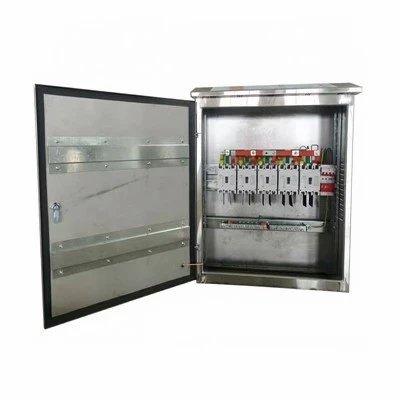
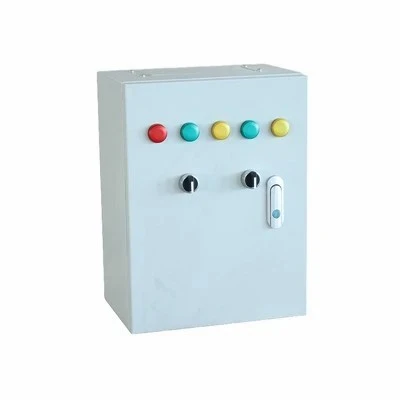
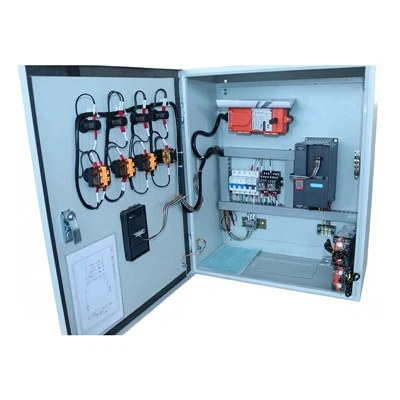
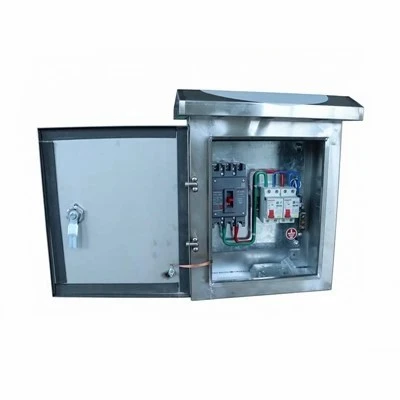
Designed for primary and secondary power distribution, this cabinet receives incoming power from transformers or switchgear and routes branch circuits to heavy machinery, motor control centers, and automation subsystems.
Enclosure Structure: Modular structural skeleton assembled from 1.5mm-2.0mm cold-rolled steel profiles, engineered with a 25mm hole-pattern pitch for versatile internal component mounting and flexible busbar tiering.
Busbar System: Electrolytic Tough Pitch (ETP) copper busbars (99.9% purity), silver-plated at contact joints, engineered for current densities up to 2.0 A/mm2 to prevent localized thermal hot spots.
Internal Partitioning: Form IP to Form IVb internal separation configurations using galvanized steel sheets or insulated barriers to segregate functional units, busbars, and cable connection zones.
Cable Entry Design: Removable top and bottom gland plates pre-punched or left blank, accommodating bottom-entry heavy-duty industrial connectors or multi-hole compression cable glands.

Technical Specifications & Configuration Matrix
|
Parameter |
Specification Range |
Compliance Standard |
|
Rated Operational Voltage (Ue) |
Up to 690V AC, 50/60 Hz |
IEC 61439-1/-2 |
|
Rated Current (In) |
Up to 6300A |
IEC 61439 |
|
Short-Circuit Withstand (Icw) |
Up to 100kA for 1s |
IEC 60439-1 |
|
Ingress Protection (IP Rating) |
IP30 to IP65 |
IEC 60529 / NEMA 12/4X |
|
Enclosure Material |
Cold-Rolled Steel (CRS) / Stainless Steel 304/316 |
ASTM A1008 / AISI 304 |
|
Surface Finish |
Epoxy-polyester powder coat, textured, 80-120 um |
ISO 2409 (Adhesion) |
|
Standard Color |
RAL 7035 (Light Grey) / RAL 7032 / Custom |
Industrial Standard |
Manufacturing & Quality Control
Production runs utilize high-precision CNC manufacturing cells to maintain structural assembly tolerances within +/-0.2mm, ensuring gasket compression integrity across all door seals.
Sheet Metal Fabrication: Trumpf CNC fiber laser cutting paired with Amada multi-axis press brakes ensures consistent bend angles, precise corner fits, and stress-free frame joints.
Welding & Seam Integrity: Robotic MIG/TIG continuous welding on structural load-bearing frames, followed by manual grinding to eliminate stress risers and secure high mechanical load ratings.
Surface Pre-Treatment: Seven-stage iron phosphate immersion cleaning eliminates rolling oils and mill scale, followed by electrostatic powder deposition and thermal curing at 200°C, passing 1000-hour salt spray corrosion tests per ASTM B117.
Factory Acceptance Testing (FAT): Every completed assembly undergoes 2.5kV dielectric withstand voltage testing for 1 minute, primary/secondary current injection checks, continuous earth bonding verification (<=0.1 ohm), and mechanical interlock operational trials prior to crating.
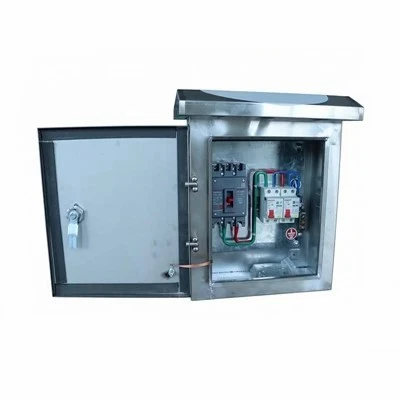
Industrial Automation Plants: Houses PLC control racks, variable frequency drives (VFDs), and heavy motor starters on continuous manufacturing lines.
Commercial Real Estate & Healthcare: Manages critical lighting, HVAC control networks, and auxiliary backup power distribution across multi-story facilities.
Renewable Energy Infrastructure: Integrated within solar inverter skids and wind turbine base towers, utilizing specialized weather-sealed gasket systems.
Supplier Assessment Checklist for Procurement Engineers
Engineering Turnaround
Can the manufacturer ingest DXF/STEP schematics and generate 3D shop drawings with busbar clearance validations within 48 hours?
01
Raw Material Traceability
Are incoming metal and copper shipments accompanied by Mill Test Certificates (MTC) validating purity and tensile strength?
02
Customization Latency
Standard lead time for custom punch profiles and modular layout adjustments ranges from 3 to 4 weeks following drawing sign-off.
03
Export Packaging Integrity
Are units secured to ISPM 15 heat-treated wooden skids, wrapped in VCI anti-corrosion film, and protected with edge reinforcement to prevent shipping distortion?
04
As one of the most experienced power distribution cabinet manufacturers and suppliers in China, we also support customized service. We warmly welcome you to buy high quality power distribution cabinet from our factory. If you have any enquiry about pricelist, please feel free to email us.