

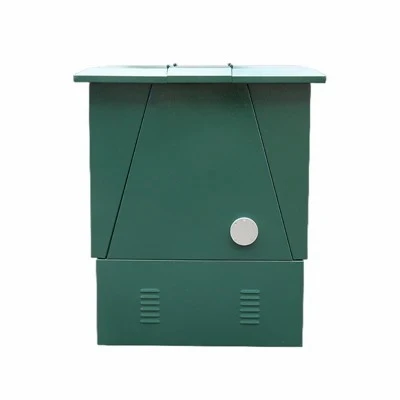
Product Overview
The Intelligent Motor Control Center (IMCC) centralizes motor control, power distribution, and real-time process monitoring into a modular switchgear assembly. Integrated microprocessor-based motor management units and smart power meters connect directly to plant-wide SCADA or DCS networks via industrial Ethernet or fieldbus protocols. Built to withstand harsh industrial environments, the system reduces physical wiring, enables predictive maintenance through continuous telemetry, and provides local and remote operational control for multi-motor industrial applications.
Technical Specifications
| Rated Operational Voltage (Ue) | Up to 690V AC, 50/60 Hz |
| Rated Insulation Voltage (Ui) | Up to 1000V AC |
| Main Busbar Current Rating | Up to 6300 A |
| Rated Short-Time Withstand Current (Icw) | Up to 100 kA for 1s |
| Enclosure Protection Rating | IP31, IP41, IP54 (customizable) |
| Form Separation | Form 1 to Form 4b (IEC 61439-1/-2) |
| Communication Protocols | Modbus RTU, Modbus TCP, Profibus DP, Profinet, EtherNet/IP |
| Ambient Operating Temperature | -5°C to +40°C (higher ratings available on request) |
Key Features
Integrated Smart Protection: Microprocessor-based motor management relays monitor phase imbalance, thermal overload, ground fault, and under/overvoltage parameters in real time.
Modular Drawer Design: Plug-in, withdrawable functional units allow hot-swapping of motor starter modules without shutting down the entire busbar system.
Arc-Resistant Construction: Internal pressure-relief channels direct arc fault gases safely away from operators, complying with IEEE 37.231 standards.
Diagnostics & Telemetry: Continuous logging of operational hours, start counts, fault codes, and energy consumption (kWh) directly transmitted to control rooms.
Applications
Water & Wastewater Treatment: Controls raw water pumps, aeration blowers, and chemical dosing systems with automated fault switching.
Oil, Gas & Petrochemical: Operates continuous-duty compressors, transfer pumps, and ventilation fans in hazardous or corrosive environments.
Mining & Minerals: Manages high-starting-torque conveyors, crushers, and slurry pumps under heavy cyclic loads.
HVAC & Building Automation: Centralizes large chiller plants, cooling towers, and fire-fighting booster pumps in commercial complexes.
Customization
Busbar Configuration: Tailored main and distribution busbar sizing based on project short-circuit calculations and thermal rise limits.
Control Integration: Pre-configured PLC, HMI, and variable frequency drive (VFD) integration matching specific plant control philosophies.
Enclosure Dimensions: Flexible panel layout arrangements, bottom/top cable entry, and color finishes matching RAL industrial standards (e.g., RAL 7035).
Manufacturing & Quality Control
Sheet Metal Processing: Enclosure panels are fabricated using CNC laser cutting and automated bending machines to maintain precise dimensional tolerances.
Surface Treatment: Steel parts undergo degreasing, phosphating, and electrostatic epoxy-polyester powder coating with a minimum thickness of 80 microns.
Busbar Fabrication: Copper busbars are CNC-punched, deburred, and silver-plated at joint connections to minimize contact resistance and thermal hotspots.
Factory Acceptance Testing (FAT): Every assembly undergoes routine verification per IEC 61439, including dielectric voltage withstand tests, secondary wiring continuity checks, and functional simulation of control logic.
Certifications & Documentation
Standards Compliance: IEC 61439-1/-2, IEC 60947-4-1, CE certified.
Documentation Package Provided: General arrangement (GA) drawings, schematic wiring diagrams, component data sheets, FAT reports, and maintenance operation manuals supplied in digital format prior to shipment.
Packaging & Delivery
Export Packaging: Enclosures are bolted to heavy-duty fumigated wooden skids, wrapped in moisture-barrier VCI polyethylene film, and enclosed in robust plywood crating for ocean or air freight.
Lifting & Handling: Equipped with integrated top lifting lugs for crane handling and forklift channels underneath for secure site transport.
FAQ
Hot Tags: intelligent motor control center, China intelligent motor control center manufacturers, suppliers, factory