

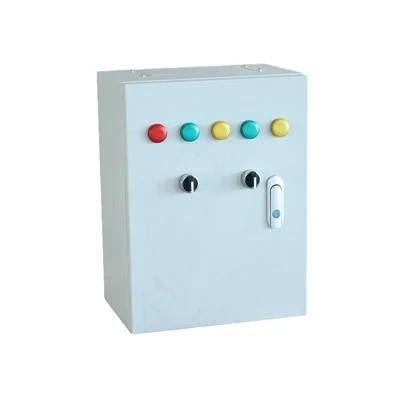
Product Overview
The Metering Power Distribution Cabinet manages electrical energy distribution, branch-circuit metering, and thermal protection in heavy industrial infrastructure and commercial facilities. Each assembly integrates multi-channel power meters with commercial-grade switching components inside a modular, floor-standing sheet metal housing. It handles bulk power intake, monitors electrical performance parameters across multiple sub-feeds, and protects downstream equipment from overloads and short circuits.
Technical Specifications
|
Parameter |
Specification Details |
|
Rated Operational Voltage (Ue) |
AC 380V / 400V / 480V (3-Phase 4-Wire) |
|
Rated Current (In) |
Up to 3200A (Custom-engineered per feeder schedule) |
|
Rated Frequency |
50Hz / 60Hz |
|
Short-Circuit Withstand Current (Icw) |
50kA / 65kA (1s rated) |
|
Metering Accuracy Class |
IEC 62053-22 Class 0.5S (Active Energy) |
|
Enclosure Protection Rating |
IP54 / IP31 (IP65 available for corrosive environments) |
|
Busbar Material |
Tm-grade Electrolytic Copper (Tin-plated, conductivity >= 98% IACS) |
|
Communication Protocols |
RS485 (Modbus-RTU), Optional Ethernet (Modbus-TCP / SNMP) |
|
Standard Dimensions (H x W x D) |
2200mm x 800mm x 800mm (Modular scalable configuration) |
|
Surface Finish |
Electrostatic Epoxy-Polyester Powder Coating (RAL 7035 texture) |
Key Features
Integrated Multi-Circuit Monitoring: Houses modular power meters directly capturing voltage, current, active/reactive power, power factor, and individual harmonic distortion without requiring external transducers.
Compartmentalized Internal Architecture: Features physical barriers separating incoming mains, main busbar chambers, outgoing functional breaker units, and low-voltage control wire raceways to contain localized arcs.
Optimized Thermal Management: Engineered with internal computational fluid dynamics (CFD) considerations, utilizing louvered side panels and optional forced-air cooling modules to maintain temperature rise limits under continuous 100% load.
High-Purity Bolted Busbar Assemblies: Main busbars utilize electrolytic grade copper with torque-calibrated bolted joints marked with seal paint to identify loosening during routine maintenance cycles.
Standardized Fieldbus Integration: Built-in RS485 physical layer supporting Modbus-RTU protocol for seamless integration into supervisory control and data acquisition (SCADA) or building management systems (BMS).
Applications
Data Centers & Colocation Facilities: Sub-distribution rack feeds, Computer Room Air Handler (CRAH) power management, and real-time branch PDU metering.
Automated Industrial Plants: Centralized energy tracking and protection for high-draw CNC machining lines, robotic assembly cells, and continuous-process automation.
Commercial Real Estate: Main electrical utility rooms in high-rise office towers, retail complexes, and transit hubs requiring tenant sub-metering and load profiling.
Renewable Energy Systems: Inverter output aggregation and auxiliary house-load distribution within utility-scale solar or wind farm balance-of-system (BOS) skids.
Customization
Cabinets are engineered directly from client-submitted single-line diagrams (SLDs) and electrical layout constraints.
Enclosure Architecture: Dimensions, top/bottom removable gland plates, plinth structural heights, and custom color RAL specifications.
Component Integration: Specified brand preferences for circuit breakers and contactors (e.g., Schneider Electric, ABB, Siemens, Eaton) to match facility maintenance inventories.
Protection & I/O Expansion: Allocation of Type 1+2 Surge Protection Devices (SPD), auxiliary contact blocks, and expanded digital I/O expansion cards.
Manufacturing & Quality Control
Production relies on computerized sheet metal tooling and systematic electrical testing procedures to verify mechanical tolerances and dielectric safety.
Sheet Metal Fabrication: CNC laser cutting, CNC turret punching, and multi-axis hydraulic press brake bending maintain structural tolerances within +/-0.2mm across modular panel frames.
Powder Coating Line: Multi-stage chemical immersion pre-treatment followed by electrostatic epoxy powder application, cured in a thermal oven at 200°C to achieve a salt-spray resistance rating exceeding 500 hours.
Busbar Fabrication: Automated copper bar punching, bending, and burr-free edge finishing prior to tin-plating and torque assembly.
Factory Acceptance Testing (FAT): Every assembled cabinet undergoes a 2.5kV AC dielectric withstand voltage test, insulation resistance verification, control circuit continuity check, and communication handshake validation before crating.
Certifications & Documentation
Design Standards: Engineered and type-tested in compliance with IEC 61439-1/-2 specifications for low-voltage switchgear and controlgear assemblies.
Quality Framework: Produced under an ISO 9001 certified manufacturing quality management system.
Documentation Package Provided: Complete delivery includes As-Built Single Line Diagrams (SLDs), General Arrangement (GA) layout drawings, Bill of Materials (BOM), individual meter calibration logs, and routine FAT electrical test sheets.
Packaging & Delivery
Export-Grade Crating: Secured onto ISPM 15 compliant heat-treated solid wood pallets, enclosed in heavy-duty multi-layer moisture-barrier foil with active desiccant packets, and packed inside reinforced plywood crates.
Lifting & Rigging: Fitted with removable top crane lifting eyes and heavy-gauge forklift base channels for safe handling during warehouse or site offloading.
Lead Times: Standard configurable units ship within 4 to 6 weeks; specialized engineered-to-order (ETO) projects depend on component availability and SLD verification timelines.
FAQ
Hot Tags: metering power distribution cabinet, China metering power distribution cabinet manufacturers, suppliers, factory